Why a High-Quality Weather-Resistive Barrier Matters in a High-Performance Home
When most homeowners think about what protects their home from the weather, they think about roofing, siding, brick, or stone. But one of the most important layers of a home's exterior is something you may never see once construction is complete: the weather-resistive barrier, or WRB. A properly designed and installed WRB helps protect the structure from wind-driven rain and unwanted air infiltration while allowing the wall assembly to manage moisture effectively. For a high-performance home, the WRB isn't simply another construction material — it is part of an integrated building enclosure designed to keep the home comfortable, durable, and energy efficient for decades.
What Is a WRB?
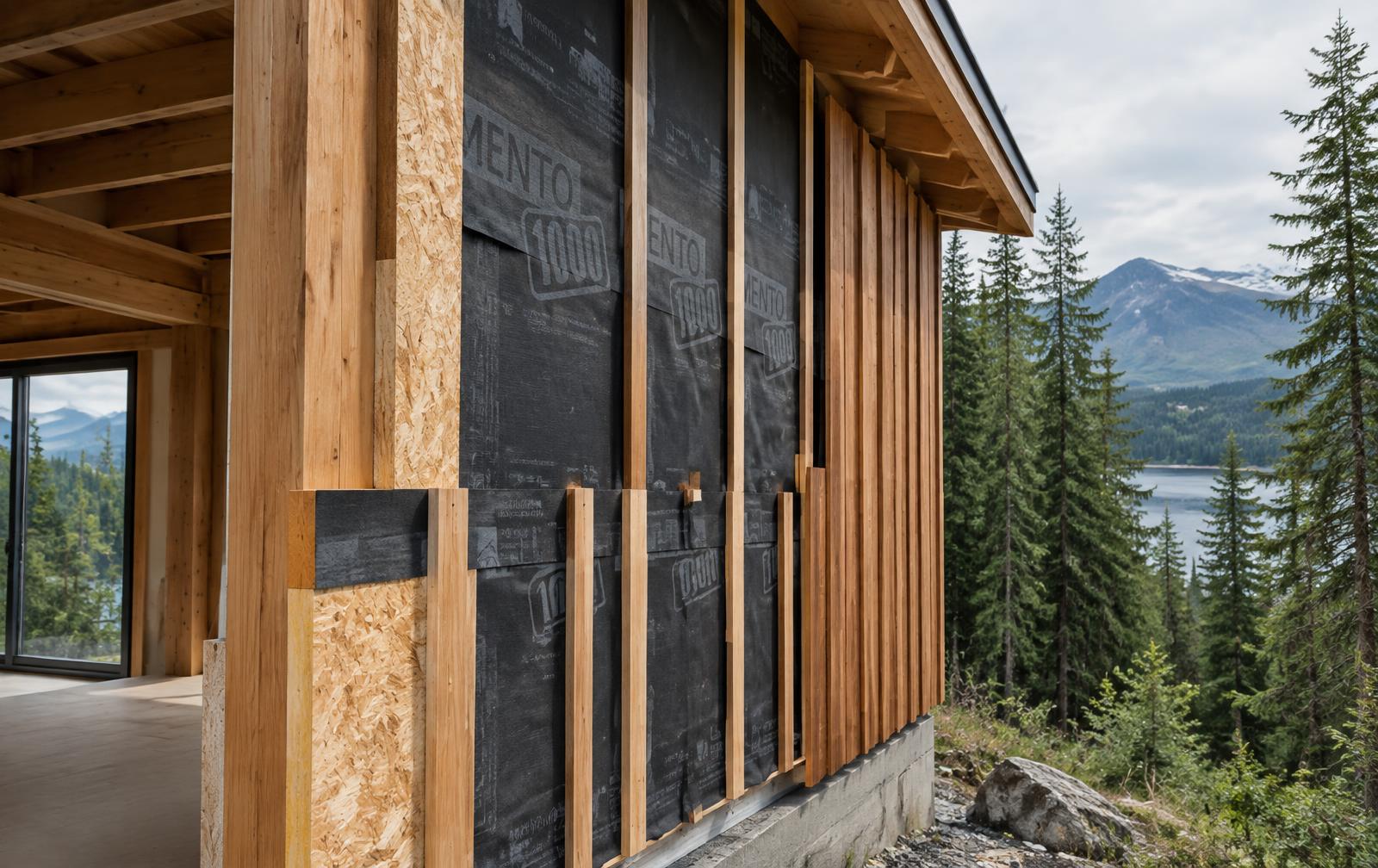
A weather-resistive barrier is installed behind the exterior cladding and serves as the wall assembly's primary drainage plane. If rain gets behind siding — which should be expected — the WRB directs that water downward and safely back to the exterior.
Modern WRBs can include mechanically fastened housewraps, fluid-applied membranes, self-adhered membranes, and structural sheathing systems with integrated water-resistant surfaces. In high-performance construction, we often ask this layer to do even more. When seams, penetrations, windows, doors, and transitions are carefully sealed, the WRB can also become an important component of the home's continuous air-control layer.
Water Management Is About More Than Siding
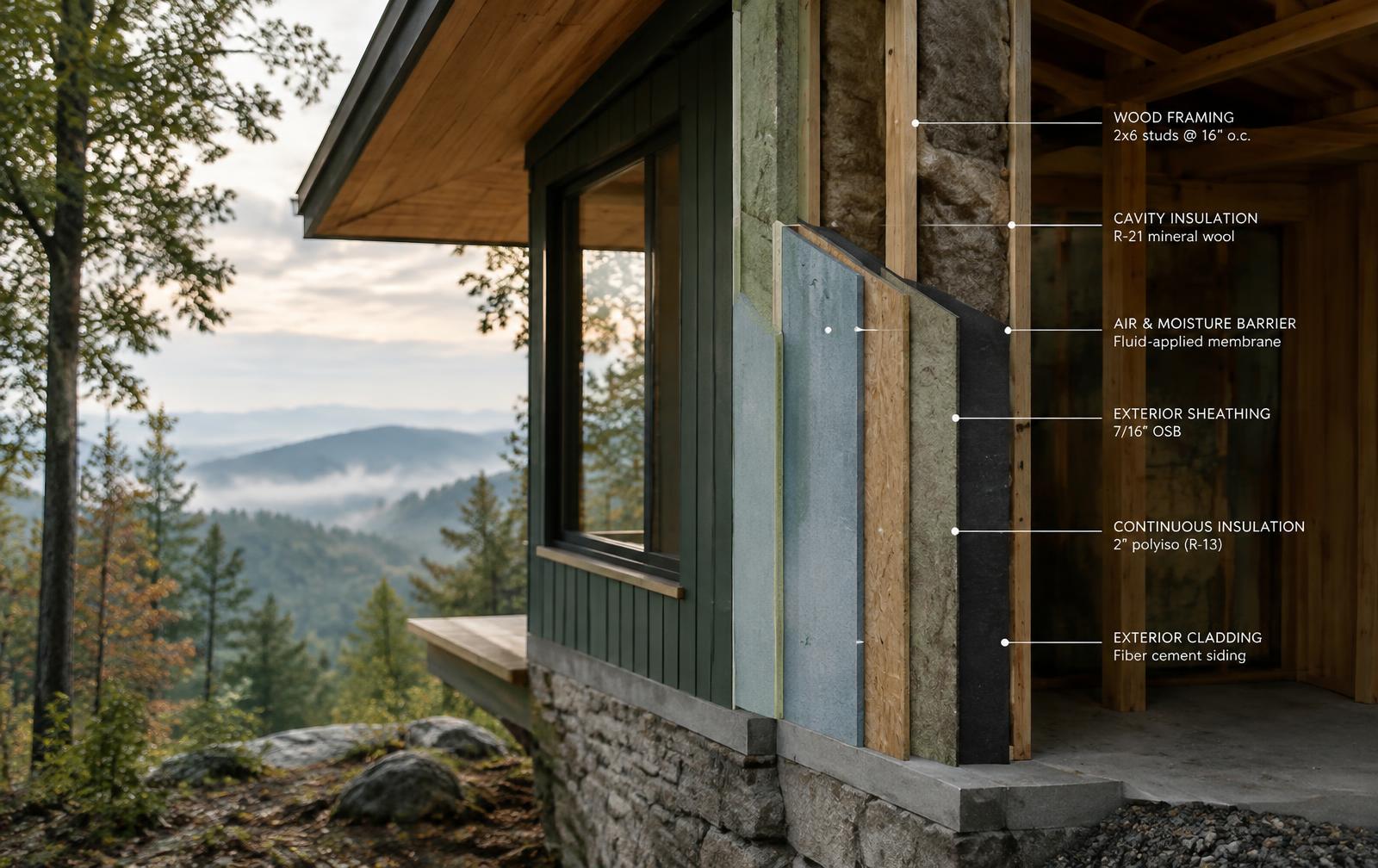
Exterior cladding is not intended to be perfectly waterproof. Wind-driven rain can find its way behind wood siding, fiber cement, masonry, and other exterior finishes. That's why good wall design uses multiple layers of protection. Behind the cladding, a properly detailed WRB provides a second line of defense. Pairing it with a rainscreen cavity creates space behind the siding where bulk water can drain and materials can dry.
This approach is particularly valuable in climates that experience substantial rainfall and humidity, such as Western North Carolina. The goal isn't to assume water will never get behind the cladding. The goal is to design a wall that can manage water when it does.
Airtightness and Energy Efficiency
A high-quality building enclosure also helps control air movement. Uncontrolled air leakage can allow conditioned indoor air to escape while bringing outdoor air into the building. That increases heating and cooling loads and can make rooms less comfortable.
More importantly, moving air can carry significant amounts of moisture into wall and roof assemblies. Creating a continuous air barrier around the building helps reduce these risks. Programs and standards such as ENERGY STAR Certified Homes and Phius emphasize air sealing and building-envelope performance because controlling air leakage is fundamental to creating an efficient and comfortable home.
The Details Matter
Even an excellent WRB product can perform poorly if it isn't installed correctly. The most vulnerable areas of a building enclosure are typically the transitions: windows, doors, roof-to-wall connections, decks, penetrations, foundations, and mechanical openings.
A high-performance installation treats these areas as part of one continuous water- and air-control system. Window openings, for example, should be integrated with the surrounding WRB so water is directed outward rather than trapped inside the wall. Flashing materials should overlap in a way that encourages drainage, and penetrations through the enclosure should be properly sealed. Simply purchasing a premium WRB doesn't create a high-performance wall. Installation quality and detailing are just as important as the product itself.
WRBs and Building Durability
Moisture is one of the greatest threats to the long-term durability of a building. Persistent moisture inside a wall assembly can contribute to wood decay, corrosion, deterioration of finishes, and conditions favorable to mold growth.
A well-designed enclosure addresses moisture using several complementary strategies: shedding rain at the exterior, draining water that gets behind the cladding, controlling air leakage, and allowing assemblies to dry appropriately. This is why building science focuses on water, air, vapor, and thermal control layers rather than relying on any single product.
Why We Prioritize the Building Envelope
At Arbor Stone Homes, we believe some of the most important features of a home are the ones hidden behind the finished surfaces. High-performance windows, continuous exterior insulation, advanced framing, careful air sealing, rainscreen systems, and high-quality WRBs all work together to create a better building enclosure.
These details may not be as immediately visible as countertops or flooring, but they can influence how a home performs every day. A well-executed building envelope can contribute to greater comfort, lower heating and cooling demand, improved moisture management, and longer-lasting construction. The exterior finishes make a home beautiful. The layers behind them help make it resilient.