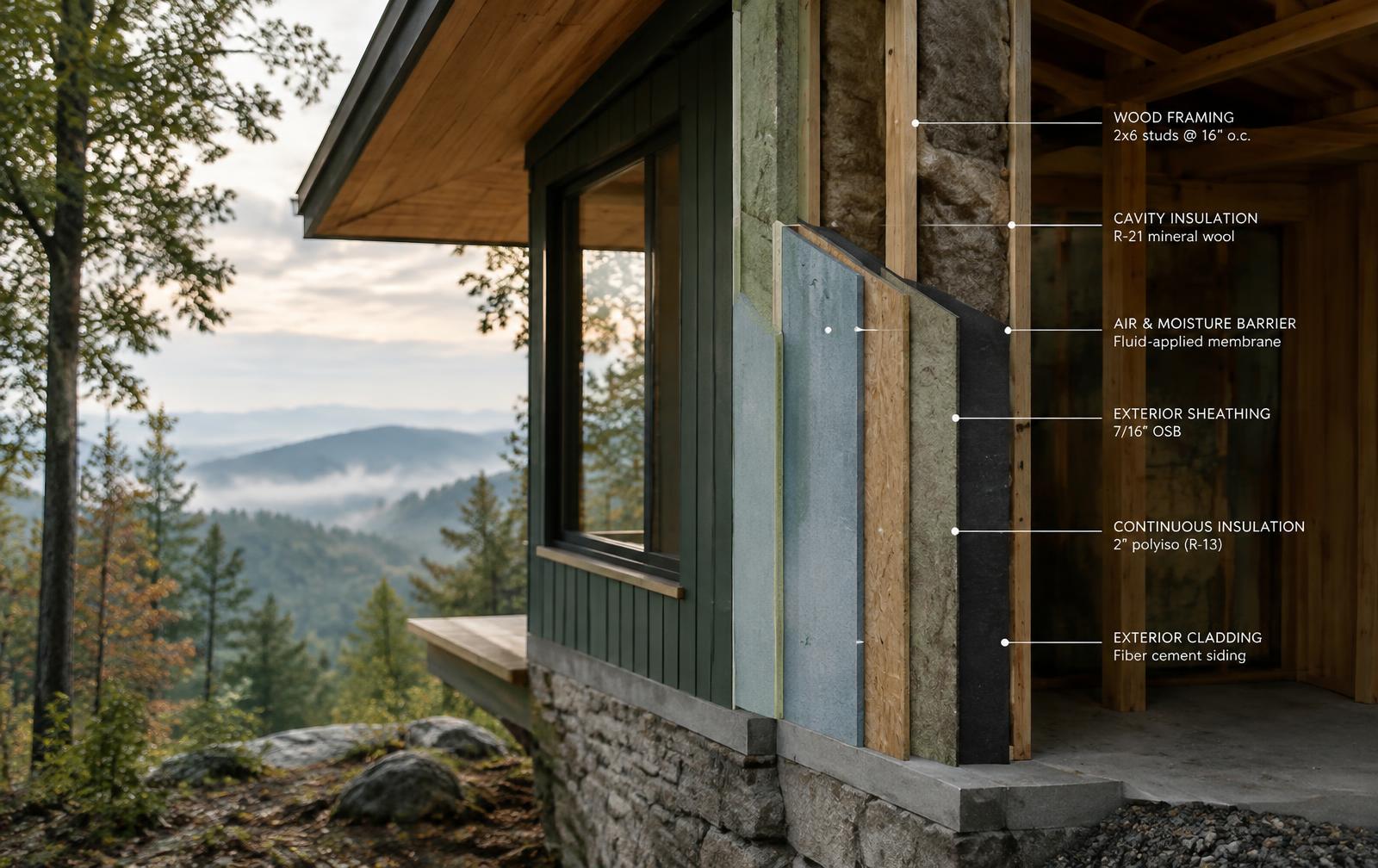
Why Airtightness Matters: The Foundation of High-Performance Homes
When most homeowners think about an energy-efficient home, they picture thick insulation, high-performance windows, or solar panels. While these features are important, one of the most critical — and often overlooked — components of a high-performance home is airtightness. Whether you're building to LEED, ENERGY STAR, or PHIUS (Passive House) standards, airtight construction is a cornerstone of superior building performance. By reducing uncontrolled air leakage through the building envelope, an airtight home delivers greater comfort, healthier indoor air, lower energy costs, and increased durability.

What Is Airtightness?
Airtightness refers to a building's ability to prevent uncontrolled air from leaking through gaps, cracks, and penetrations in the building envelope. Small openings around windows, plumbing, electrical penetrations, framing joints, and attic connections allow conditioned air to escape while drawing unconditioned outdoor air inside.
Air leakage wastes energy and can transport moisture into walls and roofs, increasing the risk of mold, wood rot, and reduced insulation performance. LEED, ENERGY STAR, and PHIUS all recognize airtightness as a key component of high-performance construction.
Benefits of Airtight Construction
A tightly sealed envelope pays back across comfort, health, energy, and longevity.
- —Lower energy bills by reducing heating and cooling losses.
- —Greater year-round comfort with fewer drafts and temperature swings.
- —Improved indoor air quality when paired with balanced mechanical ventilation (HRV/ERV).
- —Increased building durability by reducing moisture migration into assemblies.
Airtightness in ENERGY STAR
ENERGY STAR Certified Homes require third-party verification and blower door testing to ensure the building envelope meets strict air leakage requirements.
Airtightness in LEED
LEED for Homes recognizes airtight construction as an important strategy for improving energy efficiency, indoor environmental quality, durability, and sustainability.
Airtightness in PHIUS
PHIUS places exceptional emphasis on airtight construction, requiring rigorous blower door testing and quality assurance to minimize energy demand while maximizing comfort.
Blower Door Testing
A blower door test measures air leakage and helps identify hidden leaks before project completion. It is an essential quality-control step for high-performance homes.
Conclusion
Whether your goal is lower utility bills, healthier indoor air, or certification through LEED, ENERGY STAR, or PHIUS, airtightness is one of the most valuable investments in a new home. Proper air sealing helps create homes that are efficient, durable, comfortable, and built to last.